
7 Things to Have In Place Before You Hire a Web Designer
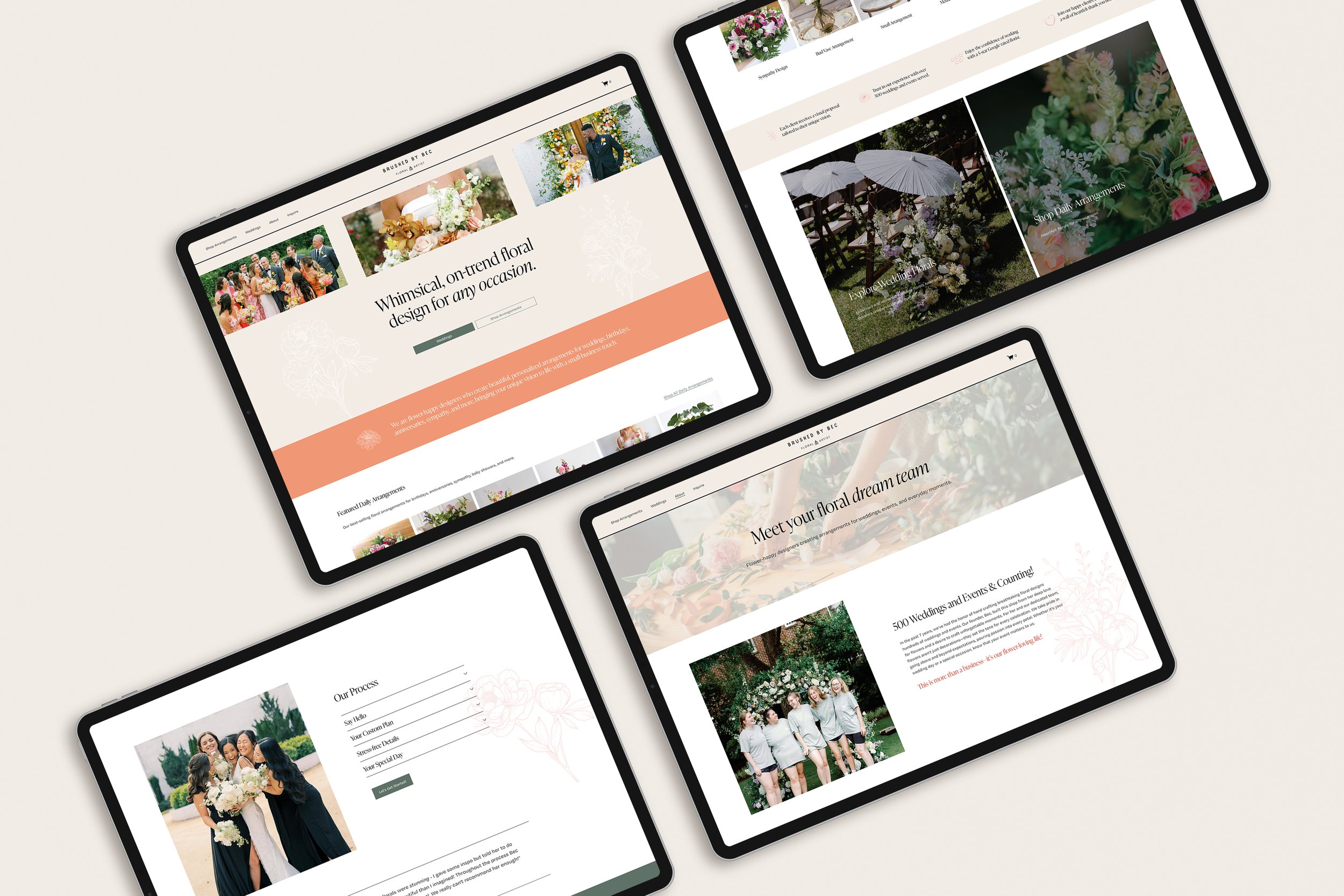
You've been thinking about it for months now. Your website needs a refresh (or maybe you don't even have one yet), and you're finally ready to hire a web designer to make it happen (hi, welcome!).
However, jumping into a website project before you're actually ready can end up costing you more time, money, and frustration than it's worth.
So before you start searching for "web designers near me" or reaching out to outsource web design work, let's walk through the 7 things you absolutely need to have in place first. Having these foundations set will make the design process smoother, faster, and way more effective for your business.
Why Preparation Matters Before You Hire a Web Designer
A website project is a really important step for your business, and it requires preparation on a few different levels. Not just in terms of your business foundations (knowing your offers, pricing, and how your business actually works) but also in terms of the assets you need to support the site, which we’ll talk about shortly.
A website is also a much better investment when it’s built for a business idea that’s already viable and profitable. When you know you’re going to stick with this direction for a while, you can make the right moves without worrying about having to redo everything when your business plan changes (again).
If you're wondering whether now is the right time to move forward, I wrote an entire guide on how to know if you're ready to hire a brand and web designer. Along with this article, it'll help you figure out where you are and what might need to happen before you start a project.
So let's make sure you're ready. Here are the seven things you need to have in place.
7 Things You Need in Place Before You Hire a Web Designer
1. Clear Brand Positioning
Before you hire a web designer (or even think about outsourcing web design work), you need to know exactly who you serve, what problem you solve, and what makes you different from your competition.
I know that sounds simple, but you'd be surprised how many people skip this step.
Your brand positioning is the foundation of everything on your website. It shapes your messaging, your visuals, your calls-to-action, everything. And if you're not clear on it yet, your designer can't create a site that actually connects with the right people.
Here are some questions you should be able to answer before starting a website project:
Who is my business for?
What problem do I help them solve?
What result do they want after working with me?
Why would someone choose me over another option?
What makes my approach or experience different?
Who is this not for?
What do I want to be known for?
If you can answer these confidently, you're in a great place. If you're still working through them, take some time to get clarity first. Your website will be so much stronger because of it.
(And if you want to see how clear positioning translates into actual website design, you can check out my portfolio to see some recent projects.)
2. Your Business Foundations: Offers, Pricing, and Processes
The best websites are built on a strong foundation. And by that, I mean your offers are set, your pricing is set, and your client journey (what happens from the moment someone finds you to the moment they become a client) is clear.
That doesn’t mean these things can never change. But if you’re constantly tweaking things, it might not be the right time yet. When those pieces are locked in, your website has a clear job and structure.
You also don’t want to be updating your site every time you have a new idea. It’s much easier to build it on a solid foundation and revisit it every quarter for small tweaks than to need a full overhaul every time your business shifts.
So before you hire a web designer, get clear on your business model. That clarity makes the entire design process smoother.
3. Brand Identity (Logo, Color Palette, Fonts, and Other Visual Elements)
I personally require that my clients have branding in place before we start on their website. That means at least a logo, color palette, and fonts.
Why? Because the website design builds on top of that brand foundation. Your website should feel like a natural extension of your brand identity, not something we're trying to figure out as we go.
Now, if you don't have branding yet, that's totally okay! I offer branding services alongside web design services, so we can create your full brand identity first and then build your website.
So before you hire a web designer, have your branding defined. And start gathering inspiration for what you want your website to look and feel like.
4. High-Quality Brand Photos (or a plan to get them)
Photos dramatically affect the final website.
You can have the best design in the world, but if the photos are low-quality or generic stock images, the site won't feel as strong or trustworthy as it could.
So before you start a website project, you either need high-quality brand photos ready to go, or you need a solid plan to get them ASAP.
What kind of brand photos do you need for your website?
A mix of headshots, lifestyle shots, and images of your service or product that all fit the same look and feel.
I’m not a fan of stock photos. It’s really hard to maintain a consistent tone and style across different photographers, and anyone can use the same images. That ends up weakening your brand recognition and making everything feel generic.
Brand photography makes your website better because the site feels more genuine, personal, and easier to trust when the real person and service is featured. People connect with people, not stock models they've seen on ten other websites.
If you don't have brand photos yet, that's okay! Just make sure you have a plan (and ideally a photographer booked) before your website goes live.
5. Website Copy (Or Your Copywriter Secured)
Your website copy is just as important as the design.
Actually, let me say that differently: branding and web design are the strategy and visuals that attract your ideal clients and communicate professionalism and credibility.Brand messaging and website copy, on the other hand, are the psychology and words that actually sell your offers.
You need both.
Investing in beautiful design without an equally strong copy is like showing up to a discovery call wearing a gorgeous outfit but completely unprepared for what you’re going to say (or saying nothing at all). You’re hoping the outfit alone will do the work, but in reality, what you say matters just as much.
On the flip side, being an excellent communicator but showing up in your pajamas creates the same problem. Neither one alone is going to give you the results you’re hoping for.
And that’s exactly what happens when design and copy aren’t equally matched. The site doesn’t perform the way it should, and business owners end up disappointed after investing thousands into one piece of the puzzle without seeing the return they expected.
Now, I get it. Investing in all of this can sound expensive, but it’s worth thinking about it as a long-term investment that pays off over time. There are also plenty of ways to make it work for your budget, like payment plans, template customizations, website copy audits, or starting with the essentials and building from there.
And if you want to talk through what makes the most sense for your business, feel free to reach out. We can figure out a plan that works for you.
6. The Strategy for Your Website (What You Need It To Do)
Before you hire a web designer, you need to know what you actually need your website to do.
There should be a primary goal for your website, and ideally, one main call-to-action per page. It's called the Paradox of Choice, and it's proven to increase conversion rates when there's only one clear action a visitor needs to take versus having a bunch of different options competing for their attention.
Does your website exist to:
Book consultations or inquiries?
Sell an offer directly?
Build an email list?
Build authority in your space?
Reinforce credibility to people who were referred to you?
It's always a case-by-case basis, but in most cases, I recommend no more than two goals per website and one goal per page.
And if you build your website on Squarespace (which is what I recommend for most businesses), you get everything you need in one place (scheduling, e-commerce, email marketing, a blog, analytics, and easy integrations with the tools you already use, including payments). If you want to learn more about why I recommend Squarespace for most business websites, you can read my full breakdown here.
7. Basic Tech Setup That Supports the Design Process
Last but not least, you'll need some basic tech in place before you hire a web designer.
At minimum, you'll need a domain name and a professional email with that same domain. Those are the only tools you absolutely need to have set up before starting a website project.
From there, you can integrate other tools that connect with your CRM, email platform, accounting software, or bookkeeping system. You can even set up automations if that's part of your workflow.
The good news? If you're working with a designer who builds on Squarespace (like I do), the platform has many built-in tools and is incredibly friendly when it comes to connecting other tools to it. (So you're not juggling a million different subscriptions or trying to figure out complicated integrations).
When You Might Not Be Ready to Hire a Web Designer Yet
Look, I know how exciting it is to finally be ready to invest in a professional website. But if you're still figuring out your business model, testing different offers, or not sure who you're actually serving, it might be worth waiting a little longer.
If you're not sure where you fall, check out this article where I walk through exactly how to know if you're ready to hire a web designer.
That doesn't mean you can't have any online presence. You can absolutely set up a simple one-page site or landing page in the meantime. But a full custom website is a bigger investment, and you want to make sure the timing is right so you're not paying to rebuild it six months later.
If you're planning to rebrand your business or shift directions soon, it's better to wait until you're clear on the new direction before investing in a full website. (And if you do need to rebrand down the road, that's totally normal! Businesses evolve. Just know that it's easier to build once on a solid foundation than to keep rebuilding as you figure things out.)
Ready to Hire a Web Designer? Here’s Your Next Step!
If you've read through this list and you have all 7 things in place (or you're close), you're in a great spot to start looking for the right designer!
And if you're looking to outsource web design work to someone who understands branding, strategy, and how to build a website that supports your business goals, I'd love to chat.
You can browse my portfolio to see recent projects and get a feel for my design style. And when you're ready to talk about your project, you can reach out here to book a discovery call.
Before we talk, I'd also recommend grabbing my free Website Scorecard so you can see how your current site is performing. It only takes a few minutes and gives you a solid idea of how your site is coming across to potential clients.

ABOUT THE AUTHOR
Hi, I’m Taryn Schroder
I partner with founder-led businesses building something meant to last. I design brands and websites that align the founder’s identity with how their business is perceived and experienced.
